| reviewed by Charles Markee | [more] [back] |
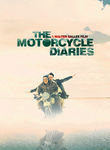
As the characters tell us, this is a story about two lives with common aspirations, common pursuits and dreams that run parallel in 1952. However, there is a third character, their motorcycle, a 1939 Norton 500 they named 'The Mighty One'. And to go one step further, this is really the story of the revolutionary awakening of Ernesto Guevara de la Serna.
The screenplay is based on true events chronicled by Guevara in a diary as he and Alberto Granado traveled 8,000 kilometers (approximately 5,000 miles) in about eight months, from Cordoba, through Argentina, Chili, Peru, Columbia, and Venezuela to Caracas. It was an adventure, but it wasn't a hero's journey. Rather it began as a lark, and then turned serious as a result of their experiences.
As the duo left Cordoba, Granado, 29 was already a doctor with a cavalier attitude and Guevara, 23 was a serious minded medical student taking a break before his final year. On their trip they were exposed to things that were funny, poignant, sad and tragic. The effect on Guevara was profound and for this reason the film left me curious about Guevara who is called Fuser in the film and who also picked up the nickname, Che, an appellation he used frequently that means 'pal' in his native Argentinean tongue.
Interested in what happened to Che after the end of the screenplay, I learned that he returned home to complete his medical education, but as a result of this trip, 1954 events in Guatemala and seeing the oppressive practices of the U.S. corporation, United Fruit, Che decided that violent revolution was the only way to effectively accomplish change. He joined Castro to overthrow the Cuban Batista government, became a high ranking military officer, published a 'how to' book on Guerrilla warfare and also became the prosecuting authority for executions in Cuba. After traveling widely, he left his position to resume revolutionary pursuits in the Congo, and then finally in Bolivia, where he was unsuccessful. He was captured and executed in 1967 by the CIA trained Bolivian military. He led quite an amazing life and you can read a brief biography at <http://www.kirjasto.sci.fi/guevar.htm>.
Separated from the storyline, the cinematography would provide a beautiful travelogue for the western side of South America. The screenplay also successfully dramatizes the motorcycle adventure and those experiences that had a great impact on Che. I can't help but feel it is unfortunate that a person with his medical education and energy, found it necessary to work outside the political system using violence as a modus operandi. In fact, I find it incredulous that the caring, intelligent man portrayed in the film could make a logical transition to violence. The two aspects of psychological behavior would seem to contradict each other. This may remain forever a mystery.
Alberto Granado still alive at 82, acted as a consultant for the film.
Gael García Bernal plays Guevara and it's clear from his performance that he was an excellent choice for the role. He looks like the photos of a young Guevara and he has an intense seriousness that foreshadows the future Che. Prior to this film he was Che Guevara in the 2002 mini-series, "Fidel."
Reviewed February 24, 2005
MPAA: Rated R for language
| Copyright 2005 Charles Markee | [more] [back] |