 Hum Dil De Chuke Sanam
by Chuck Markee
| reviewed by Chuck Markee | [more] [back] |
Hum Dil De Chuke Sanam|
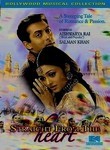
Hum Dil De Chuke Sanam (AKA Straight from the Heart) subtitles The musical performances in this film are mesmerizing and it is easy to slip into a 3- hour trance just watching two of the main characters sing and dance their way through the plot. They are, after all, beautiful people in a beautiful fantasy setting and its great fun to watch their heavy flirting. However, here in the midst of dazzling color, song and dance we also have a developing storyline that reflects the clash between romantic love and the traditional arranged marriage of East Indian culture. The film is so different from anything produced here that it is fascinating for that reason alone. Musical numbers imbedded in the story are full stage, song and dance extravaganzas with a huge cast that performs gymnastically moving through multiple fabulous sets. Add voice and music that is always amplified and always enhanced and then add wild and brilliant color schemes for every costume and every set. Its simultaneously overpowering and exhilarating. But after the first surprise switch, I learned to expect and anticipate these seamless transitions back and forth between musical extravaganza and character dialogue. As the film begins, your are launched into a party at a music school with the families playing a game, women wrapping turbans on the heads of their men. This precedes the arrival of a handsome young man, Sameer, a singer from Italy, there to study voice. He is assigned the best room in the house, which forces the beautiful daughter of the music guru, Nandini, to move. This minor tension begins the story and things seem to proceed in a straightforward way, but not for long. It gets complicated, much more complicated, with unexpected twists in the plot. And buried in with the primary issue of arranged marriages is another tradition, the role of the patriarch and the role of women, as well as some other minor biases. Thanks to an Indian friend, I learned that this film represents the culture of the Gujarat state, which lies in western India bordered by the Arabian Sea. It is mostly Hindu and I believe the language spoken in the film is Hindi. The venue for the story is mostly an enormous Haveli or palace that is both music school and home to the families, although there is a trip to Italy included. The young man, Sameer arrives during Diwali, which is a national Indian celebration of Truth and Light. This is set by the lunar calendar and is essentially a lavish five-day New Years party. <See more information at http://www.bawarchi.com/festivals/diwali1.html > Later in the film the women observe Karva Chauth which normally precedes Diwali by 9 days, so it seems out of order. This entails a fast that ends with worshiping the moon and then honoring their husbands. The general progress of time is problematic in the story since there is a mention of eight months passing at one point and you wonder how it happened. In addition to Diwali, there are a couple of weddings and a kite-flying day the party continues on. The music and choreography are nicely integrated, e.g. major flirting occurs during a song about trespassing eyes and a petulant suitor becomes the object of a song, sour lemon. And I noticed that the kite-flying scene was a metaphor for control and freedom, issues between the men and women. Aishwarya Rai (nickname Ash) plays Nandini. A stunning beauty, she was Miss World in 1994 and also runner up Miss India. She began as an architecture student, switched to modeling and is now storming Bollywood as an actress. Salman Khan plays Sameer, the voice student from Italy. He is Hindi and one of the three famous Khan brothers that dominated Bollywood in the 90s. He works out daily and has been arrested a few times for a variety of problems. Aishwarya Rai severed their two-year affair because of his tantrums and vowed never to work with him again. Ajay Devgan plays Vanraj, the other suitor. A polished actor, he has had roles in 50 films since 1991. You may notice a swastika symbol on some of the decorative flags. It was an ancient Hindu ceremonial symbol of peace, laughter, joy and good luck long before it was used in Germany. Reviewed October 27, 2003 |
| Copyright 2005 Chuck Markee | [more] [back] |